
Some homes have features that look impressive on paper but don't quite work in real life. That was the situation for our client in Bothell, whose living room had a soaring two-story ceiling. It looked grand — but for a family that needed another bedroom for their son, all that vertical space felt like a missed opportunity.
His question was one we hear more often than you'd think: can you add a bedroom without actually building an addition? In this case, the answer was yes — and the solution was right above his head.
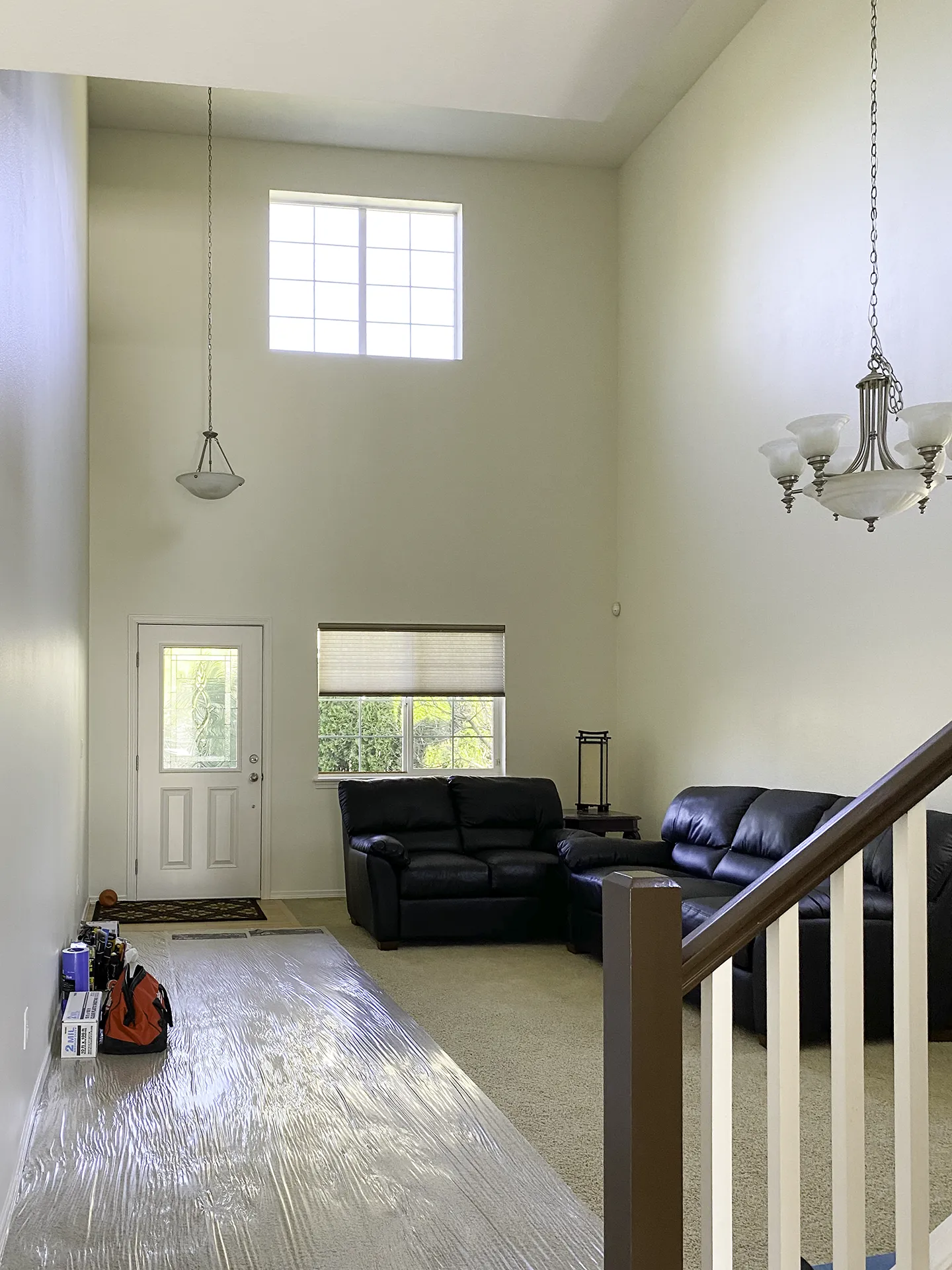
A bedroom addition hiding in plain sight
Rather than extending the home's footprint, the plan was to build a new floor across the open two-story space and convert it into a bedroom. No foundation work, no new roofline, no permits for a bump-out. Just a smart use of the volume that was already there.
Of course, "just build a floor" is easy to say. The engineering is another story.
Building a floor where there wasn't one
The first step was stripping back the drywall around the entire perimeter of the living room at the second-floor level. We needed to expose the existing framing so we could tie in our new engineered rim joists — the structural beams that would carry the load of the new floor.
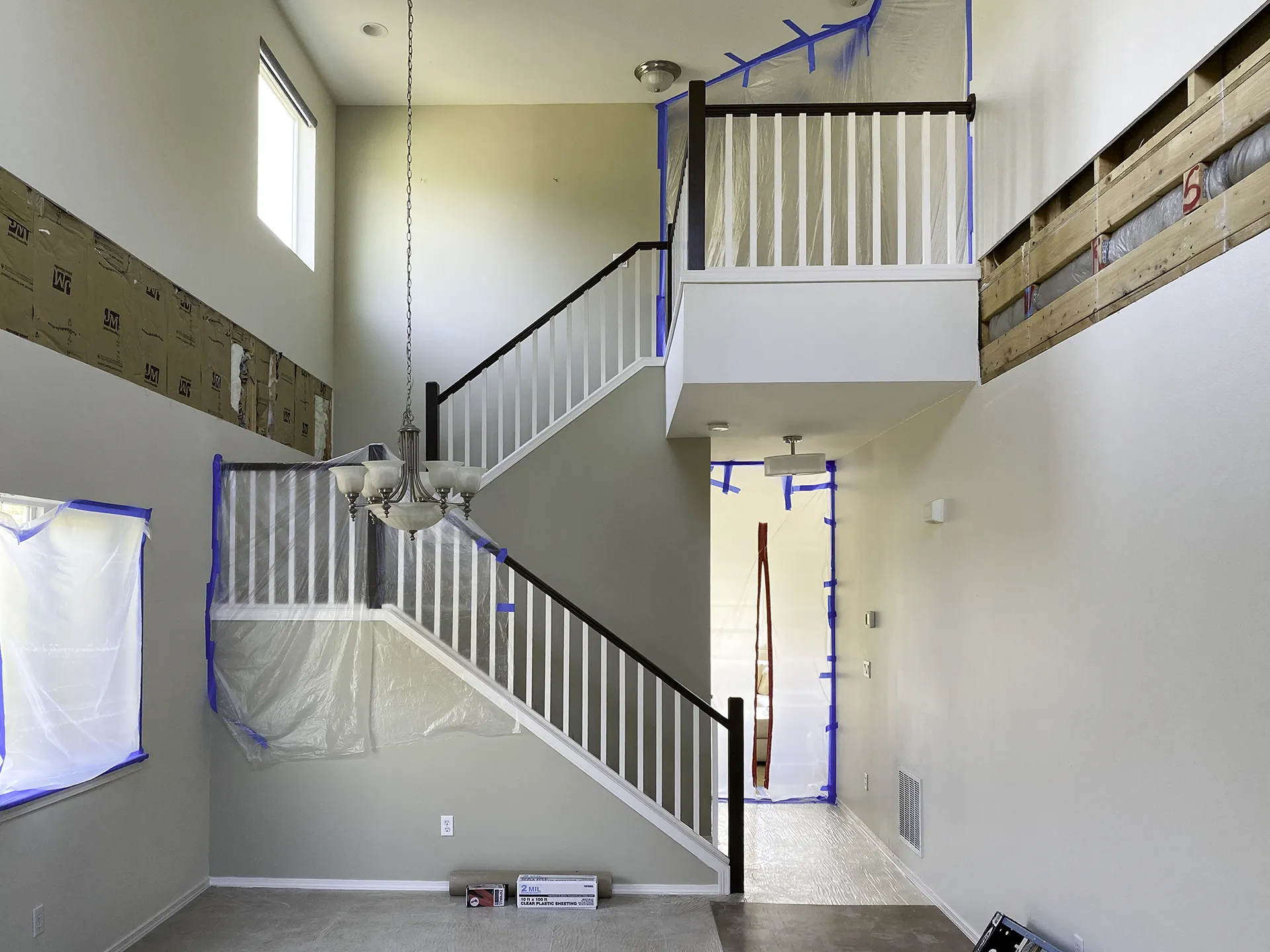
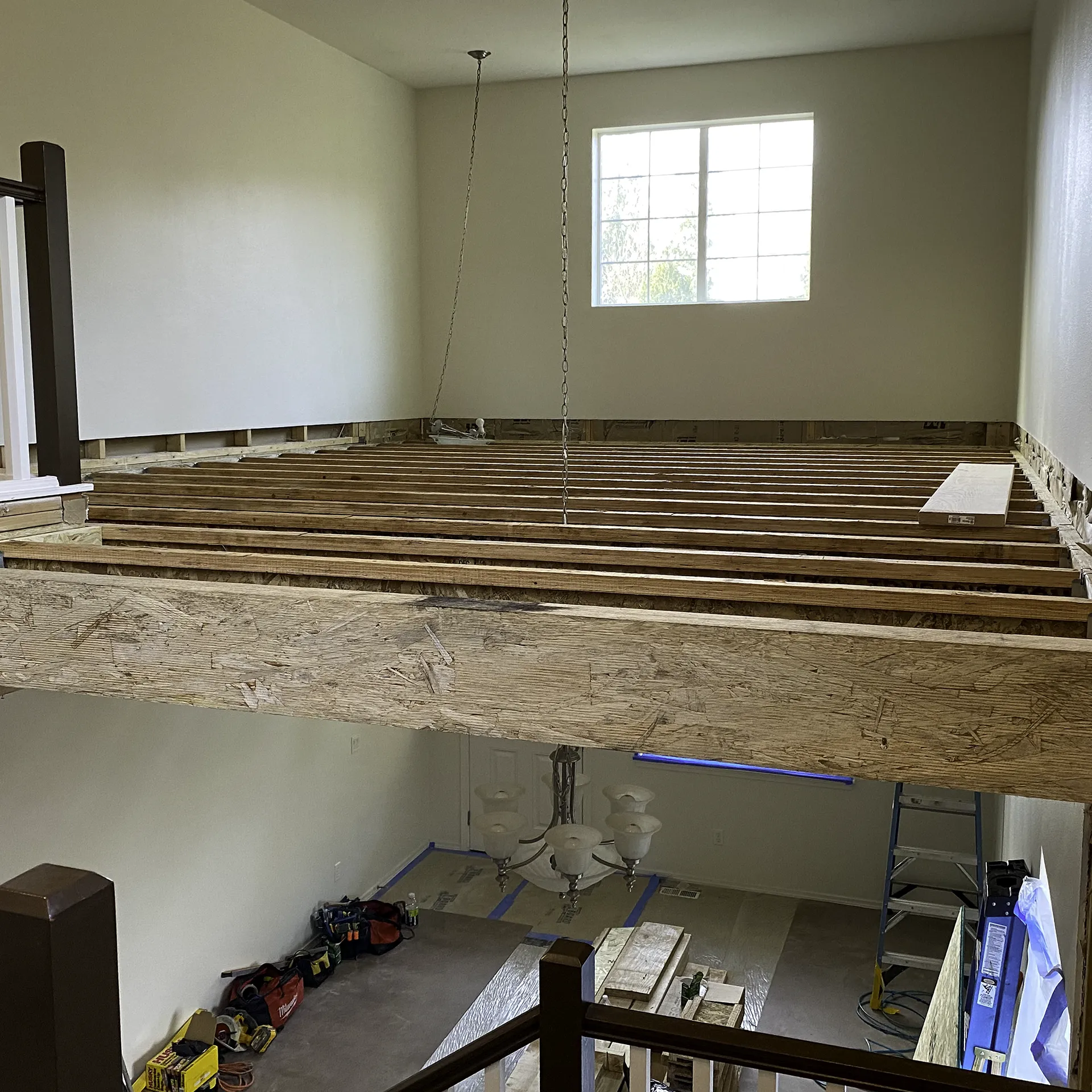
We secured those rim joists with 80 lag screws around the perimeter, anchoring them into the existing structure. This wasn't a decorative loft or a lightweight platform — it needed to be a real floor, built to code, capable of supporting a fully furnished bedroom. Once the rim joists were locked in, we installed the floor joists across the span and sheathed them with subflooring.
Just like that, there was a second floor where there hadn't been one.
Letting the light back in
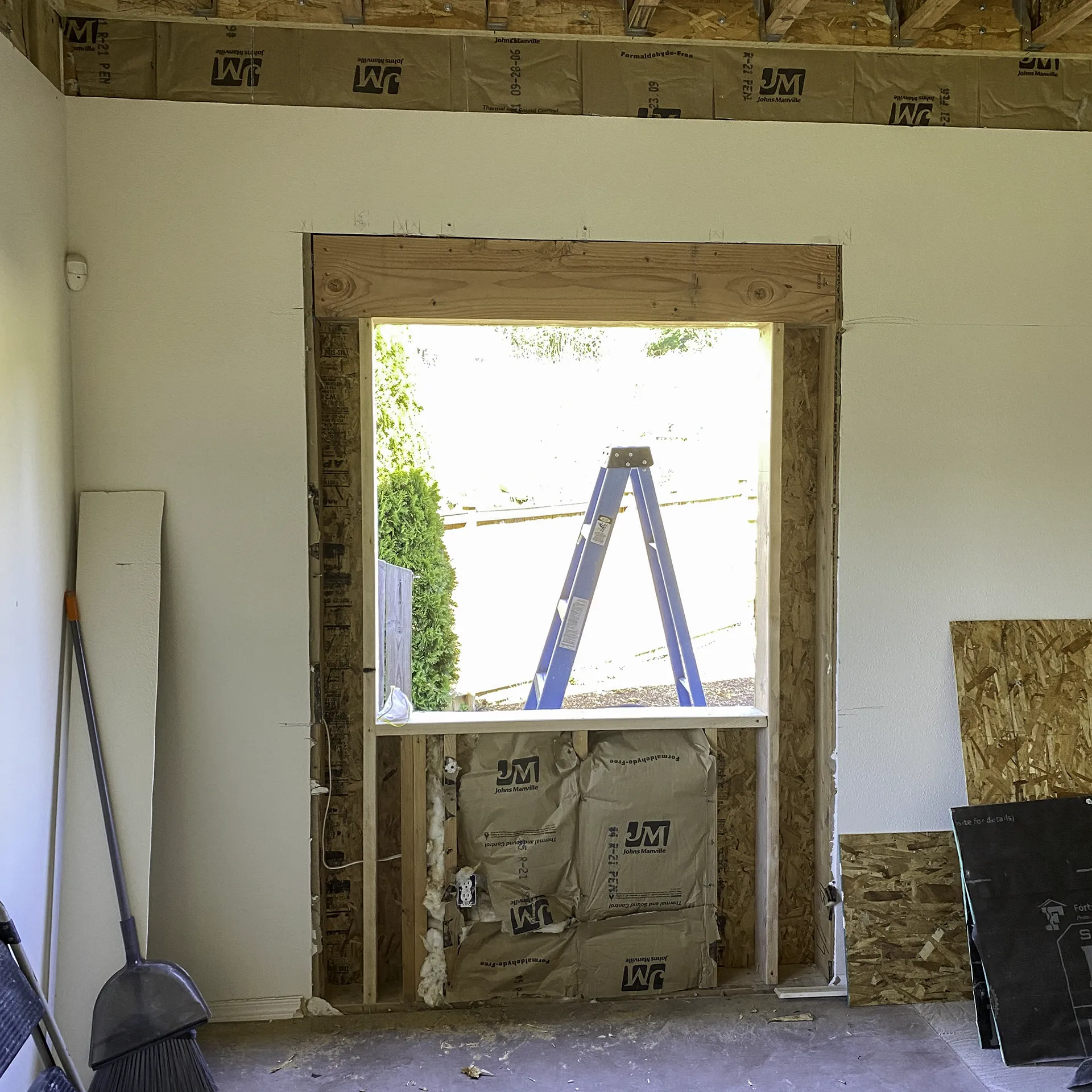
With the new floor in place, we cut into the exterior walls upstairs to frame openings for the bedroom windows. Each opening got a 6x8 header to carry the load above — standard practice when you're punching new windows into load-bearing walls.
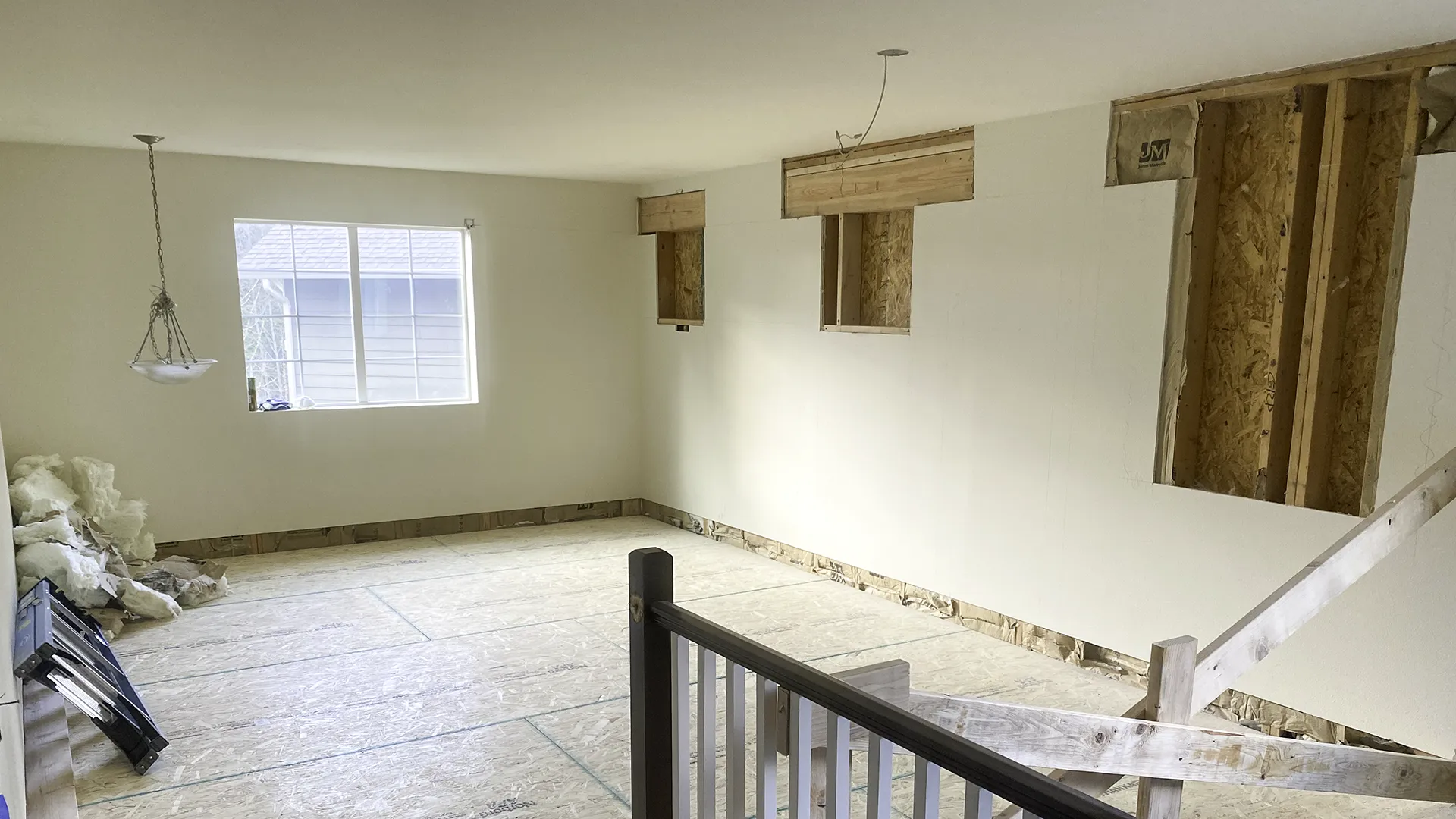
But there was a side effect the homeowner hadn't fully anticipated. That two-story ceiling had been funneling a lot of natural light down into the living room, and now that the ceiling was at a normal height, the first floor felt noticeably darker. The fix was straightforward: we cut in a generously sized window on the first floor as well. Problem solved — and the living room actually felt more inviting at its new, cozier scale.
From framing to finished
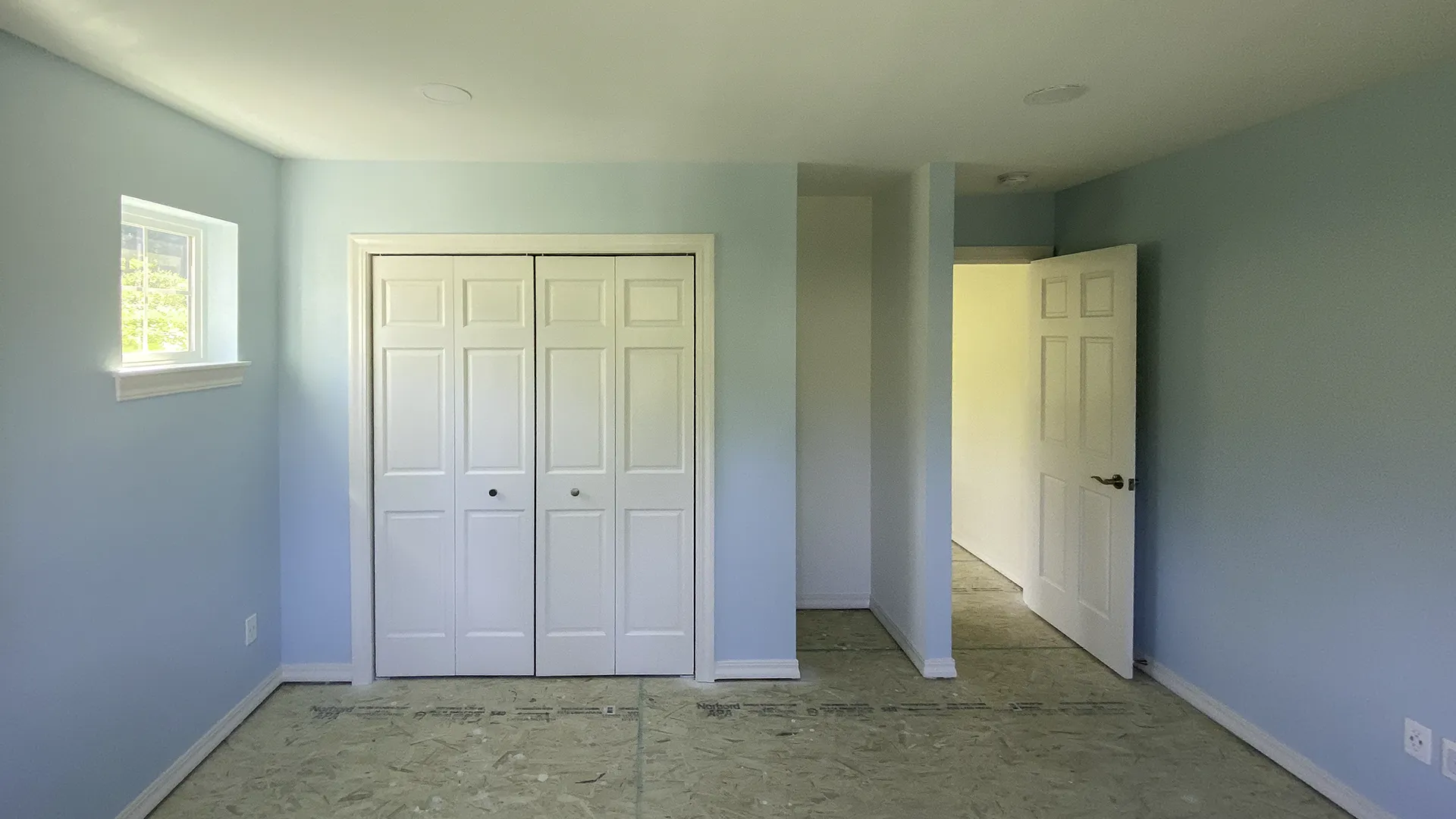
With the structural and envelope work behind us, the rest came together quickly. We framed the bedroom walls, built out a closet, hung doors, and ran electrical for lighting and outlets. Then it was on to the finish work — drywall, paint, trim, and new carpet throughout.
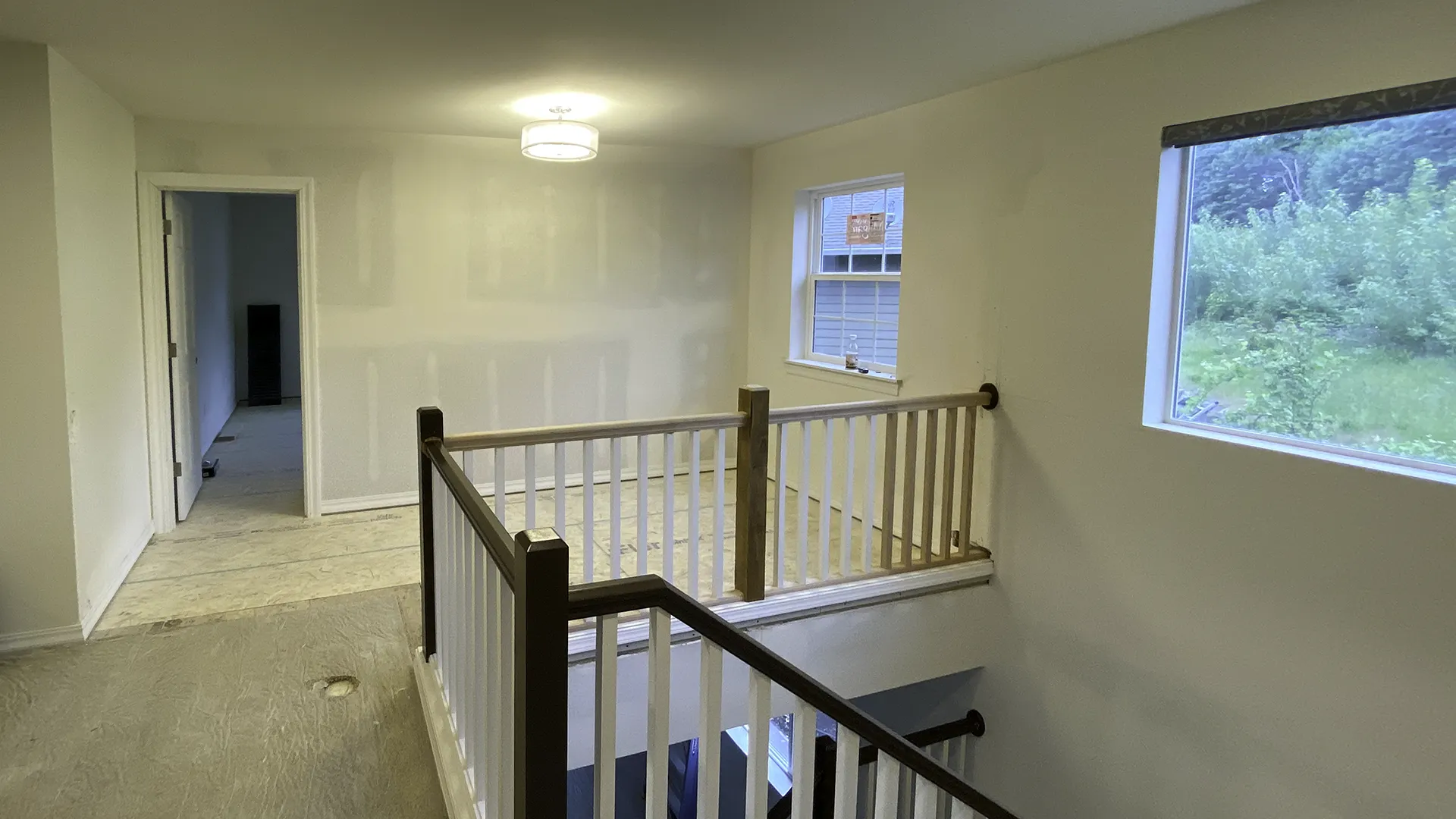
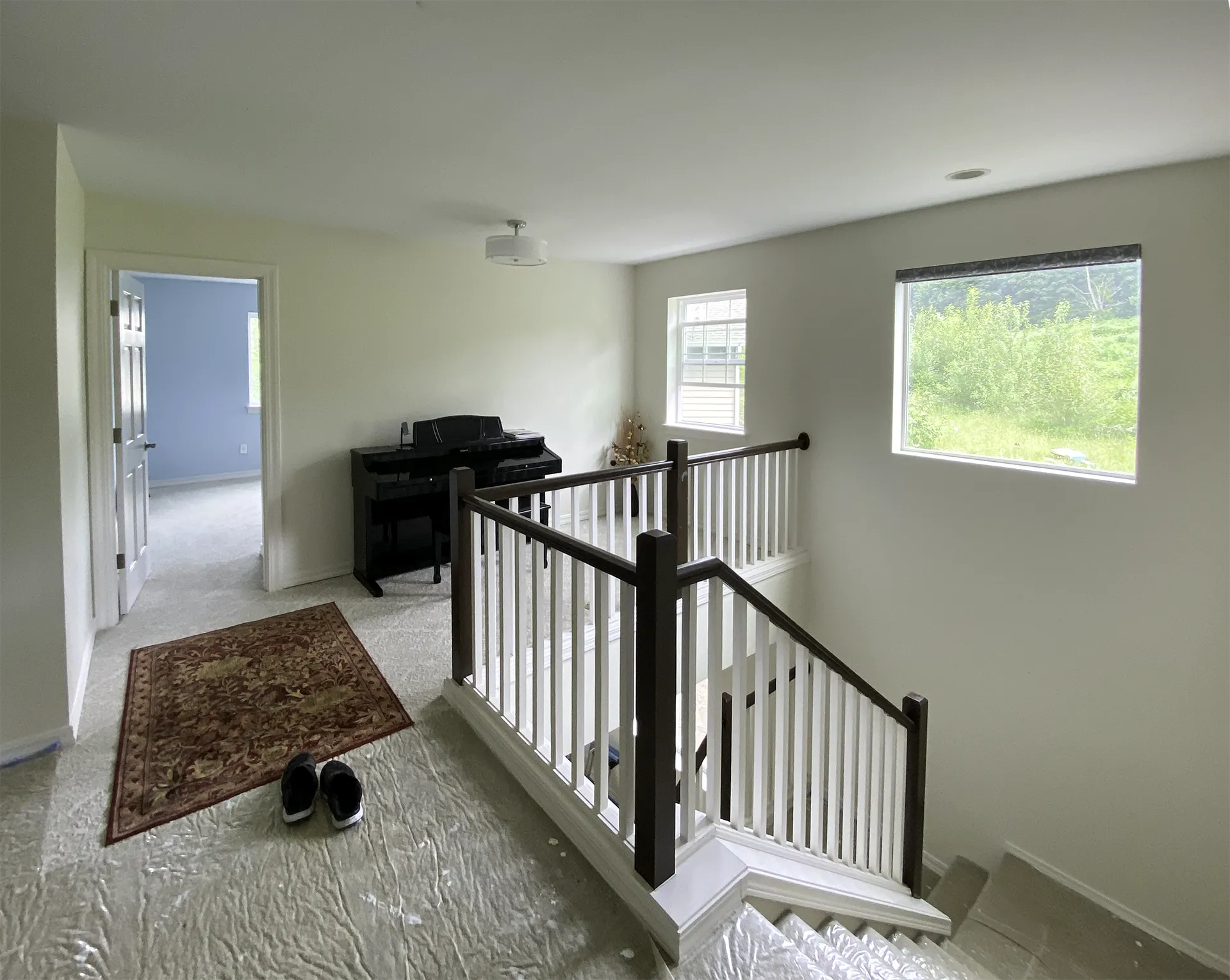
The result is a proper bedroom with a closet, natural light, and its own sense of privacy up on the second floor. The upstairs landing now opens into a real hallway, and what used to be an echoey, underused two-story void is now the most-used room in the house.
So nice, we did it twice
Here's the part we didn't see coming. After we finished the project, our client mentioned it to some friends — one of whom lived in a house built by the same developer, with the exact same two-story living room layout. Same problem, same wasted space. So we ended up doing the whole project a second time, in a nearly identical home.
It was a great reminder that these cookie-cutter builder layouts often share the same shortcomings — and the same untapped potential. If your house has one of these two-story living rooms, there's a good chance someone in your neighborhood is having the same thought you're having right now.
Making the most of what you have
Not every room addition needs to add square footage. Sometimes the space you need is already there — it's just being used the wrong way. This project didn't change the home's footprint by a single inch, but it added an entire bedroom and made the whole house work better for the family living in it.
If you've got a space that isn't pulling its weight — a two-story ceiling, an oversized bonus room, an attic that's collecting dust — there might be more potential there than you think. We'd love to take a look.
Get in touch or give us a call at (253) 448-9462.