
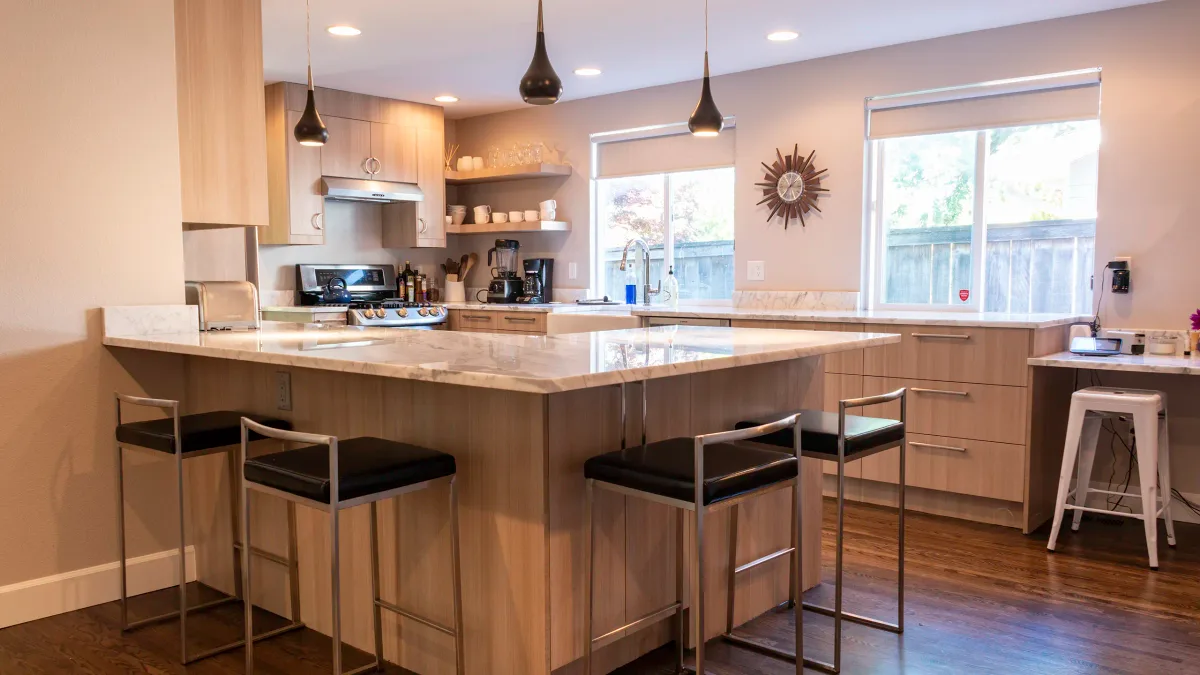
If you’ve been Googling “how much does a kitchen remodel cost” and getting wildly different answers anywhere from $10,000 to $100,000, you’re not crazy. Those ranges exist because kitchen remodels vary enormously based on a handful of key decisions. And national averages are basically useless when you’re planning a project in Seattle, where labor costs run 20–30% higher than the national median.
As owner and general contractor of NW Homeworks, I’ve been doing kitchen remodels across the greater Seattle area for over 11 years, from Tacoma and Seattle to Bellevue, the Eastside, and everything in between. The numbers in this guide come from our actual jobs, cross-referenced against industry sources like Homewyse, Angi, and HomeGuide. Real prices from a contractor who works in this market every day.
Seattle Kitchen Remodel Costs by Tier
Here’s the quick reference before we get into the details:
| Tier | Typical Range | What You’re Getting |
|---|---|---|
| Budget (IKEA / stock cabinets) | $15,000–$35,000 | IKEA or stock cabinets, laminate or butcher block countertops (quartz is possible in smaller kitchens), basic tile, builder-grade appliances |
| Mid-Range | $35,000–$65,000 | Semi-stock cabinets, quartz countertops, new appliances, full electrical upgrade, some layout changes possible |
| Upper-Mid / Semi-Custom | $65,000–$100,000 | Semi-custom cabinetry, premium countertops, full layout change, high-end finishes throughout |
| High-End / Custom | $100,000–$175,000+ | Fully custom cabinetry, luxury appliances, full gut renovation, structural changes |
These ranges assume a typical Seattle home kitchen around 120 square feet. Smaller galley kitchens will come in at the lower end; larger open-concept kitchens push toward the top.
A quick note on the Budget tier: if you’re curious about IKEA-based kitchens specifically, I wrote a detailed breakdown on how much an IKEA kitchen installation actually costs. The short version is that IKEA is a legitimate way to get a solid kitchen at a lower price, but there are tradeoffs worth understanding before you commit.
Why Seattle Costs More Than the National Average
National averages are cited around $25,000–$50,000 for a mid-range kitchen remodel. In Seattle, add 20–30% to those numbers. A few reasons:
Labor rates. Licensed tradespeople — electricians, plumbers, finish carpenters — charge more in the Seattle metro than anywhere else in the Pacific Northwest, let alone nationally. It’s a tight labor market and it shows in bids.
Older homes. A lot of Seattle homes were built in the early 1900s. Open up the walls and you’re likely to find knob-and-tube wiring, galvanized plumbing, or undersized electrical panels that need updating before you can close back up. Many of these homes also have lath-and-plaster walls instead of drywall, which adds time and mess to any demo work. A good contractor will know to look for these things and factor them in upfront — but if you’re not expecting it, seeing it in an estimate can be a surprise.
Permitting. Not all kitchen remodels require permits, but when they do, it adds both cost and time to the project. I’ll cover what actually triggers a permit requirement below.
So where does all the money actually go? Here’s a category-by-category breakdown.
Cabinets — The Biggest Cost Driver
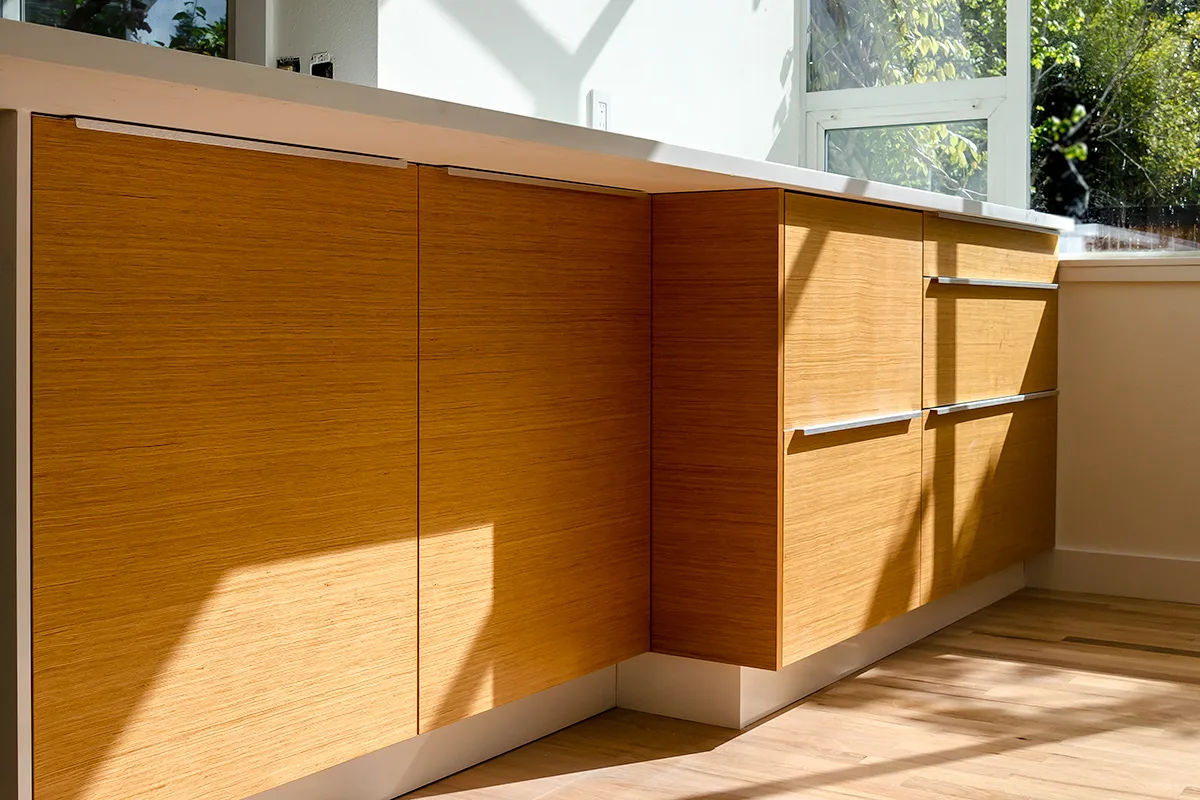
Cabinets are the single biggest line item in almost every kitchen remodel, and the range is enormous depending on where you land on the quality scale:
| Cabinet Tier | Materials + Install (per SF of kitchen) | Brands |
|---|---|---|
| Budget / Stock (IKEA) | ~$60/SF | IKEA, Hampton Bay |
| Mid-Range | ~$103/SF | KraftMaid, Thomasville |
| Upper-Mid / Semi-Custom | ~$160/SF | Canyon Creek, Dura Supreme |
| High-End / Custom | ~$271/SF | Wood-Mode, Brookhaven |
| Luxury | $388+/SF | Poggenpohl, Bulthaup |
For a 120SF kitchen, that works out to roughly $7,200 for IKEA, $12,400 for mid-range, $19,200 for semi-custom, and $32,500+ for fully custom.
One thing worth knowing: IKEA cabinet install costs more per square foot than mid-range semi-stock, because flat-pack assembly takes more labor. The cabinets themselves are cheaper, and the labor partially offsets that — but it’s not as dramatic a savings as some people expect. Still comes out ahead overall.
Countertops
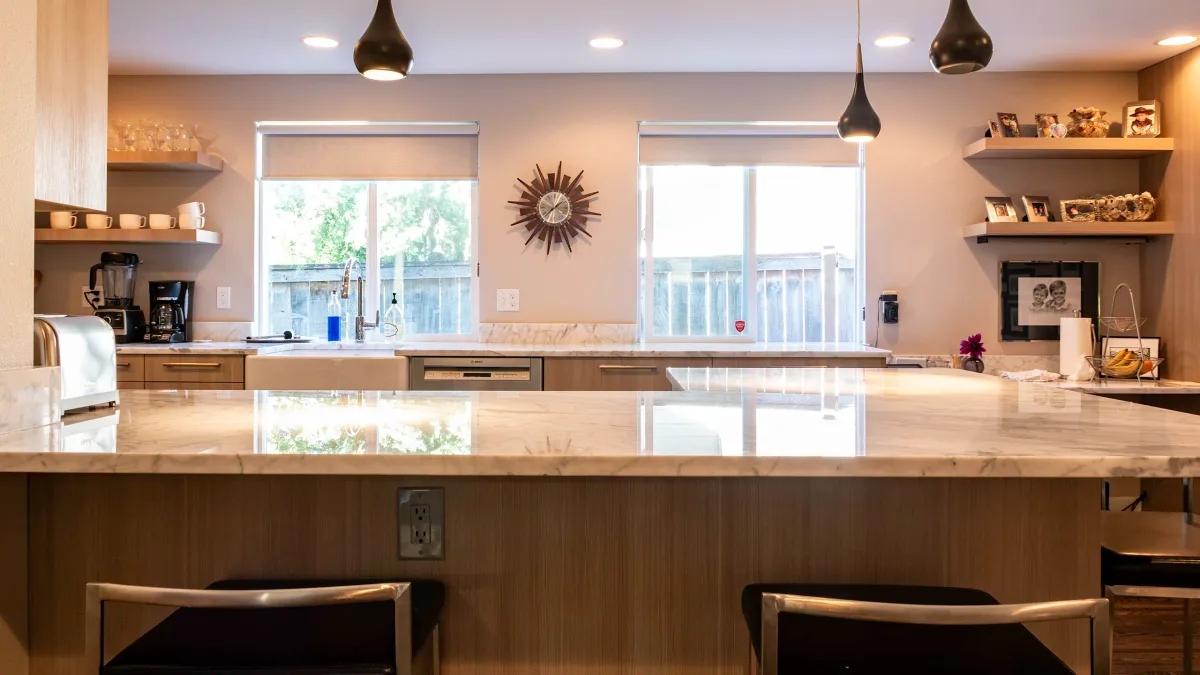
Countertops are the second biggest visual and financial decision. Here are installed prices for the materials I work with most:
| Material | Installed Cost (per SF) |
|---|---|
| Laminate | $24–$60/SF |
| Butcher Block | $43–$53/SF |
| Engineered Quartz | $88–$138/SF |
| Natural Stone (granite / marble) | $75–$160/SF |
Engineered quartz is by far the most popular choice in the mid and upper tiers right now — brands like Silestone, Cambria, and Caesarstone. It’s durable, non-porous, and easier to maintain than natural stone. For a 40SF counter area (typical L-shape), you’re looking at $3,500–$5,500 installed for quartz.
Butcher block is a popular mid-range choice and I install a fair amount of it. Hardwoods like maple or walnut with an oiled finish bring a warmth to a kitchen that’s hard to match with stone. It ages gracefully, and if it gets dinged up you can sand and re-oil it. Not ideal if someone in the house tends to use the counter as a cutting board, but otherwise it holds up well in the PNW climate.
Laminate is worth mentioning because it’s genuinely improved. The modern stuff from Wilsonart or Formica can look quite good, and the price is hard to argue with at the budget end of a project.
Backsplash
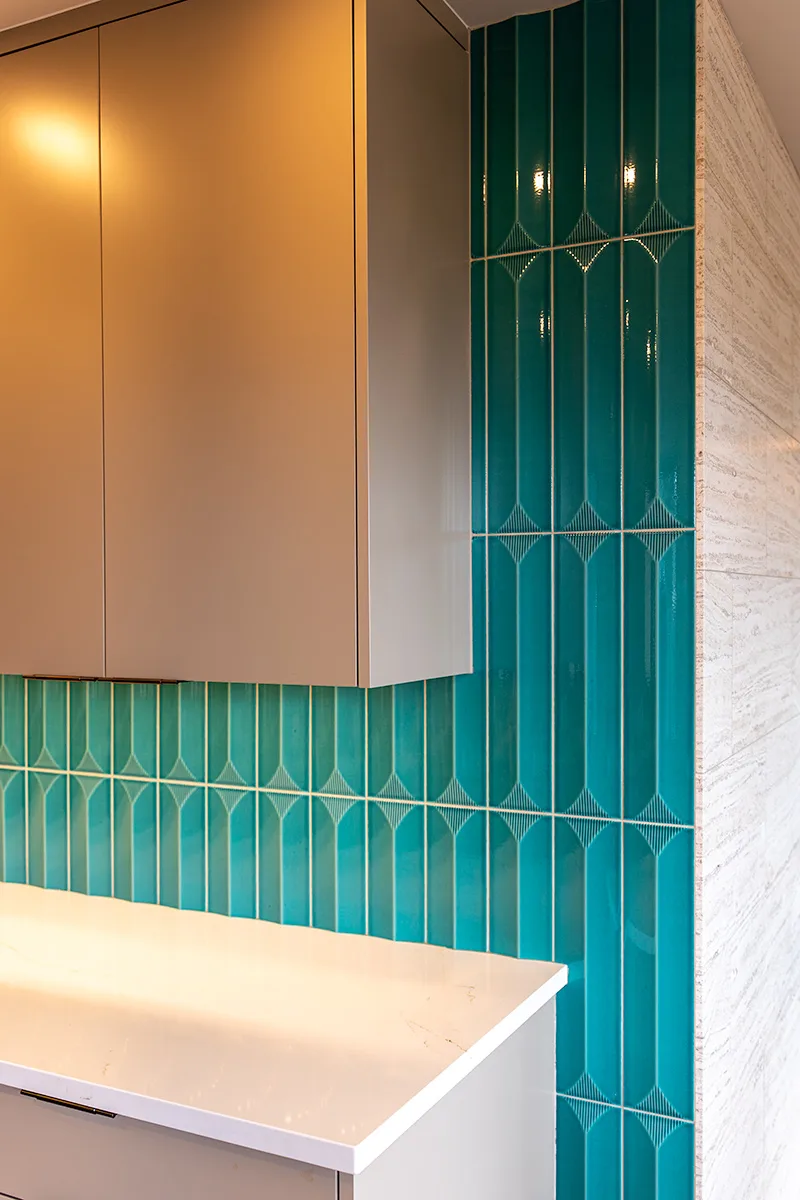
Backsplash is where a lot of personality comes in, and the price range is wider than most people expect:
| Tile Tier | Installed Cost (per SF) |
|---|---|
| Budget (basic subway tile) | ~$31/SF |
| Mid-Range (glass, patterned ceramic, mosaic, porcelain) | ~$34/SF |
| Upper-Mid (boutique tile, hand-glazed, large-format porcelain) | ~$46/SF |
| High-End (handmade / artisan tile) | $73+/SF |
Most kitchen backsplash areas run 25–45 SF, so even upper-mid tile lands between $1,150–$2,070. Where people get surprised is handmade or artisan tile — those numbers climb fast, and the install labor goes up too because of the complexity involved in setting them.
Appliances
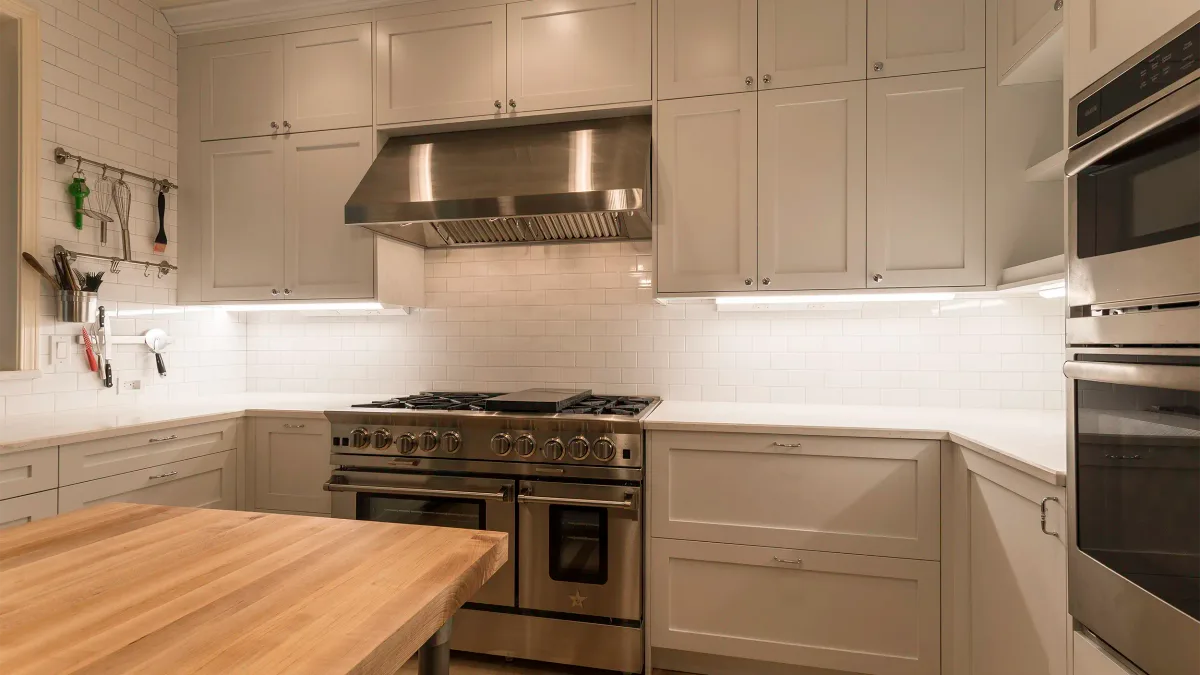
This is the part people get most excited about, and also the easiest place to blow your budget:
| Package Tier | Appliance Cost | Install (per unit) |
|---|---|---|
| Budget (Frigidaire, GE, Whirlpool) | $2,000–$4,000 | ~$225 |
| Mid-Range (KitchenAid, Bosch, Samsung) | $5,000–$10,000 | ~$225 |
| High-End (Sub-Zero, Wolf, Thermador) | $15,000–$45,000+ | ~$225 |
Appliances are often the last thing people price out, and it’s where sticker shock hits hardest. A fully outfitted Wolf/Sub-Zero kitchen can cost more in appliances alone than an entire mid-range remodel. Know your budget here before you fall in love with the showroom display.
Flooring
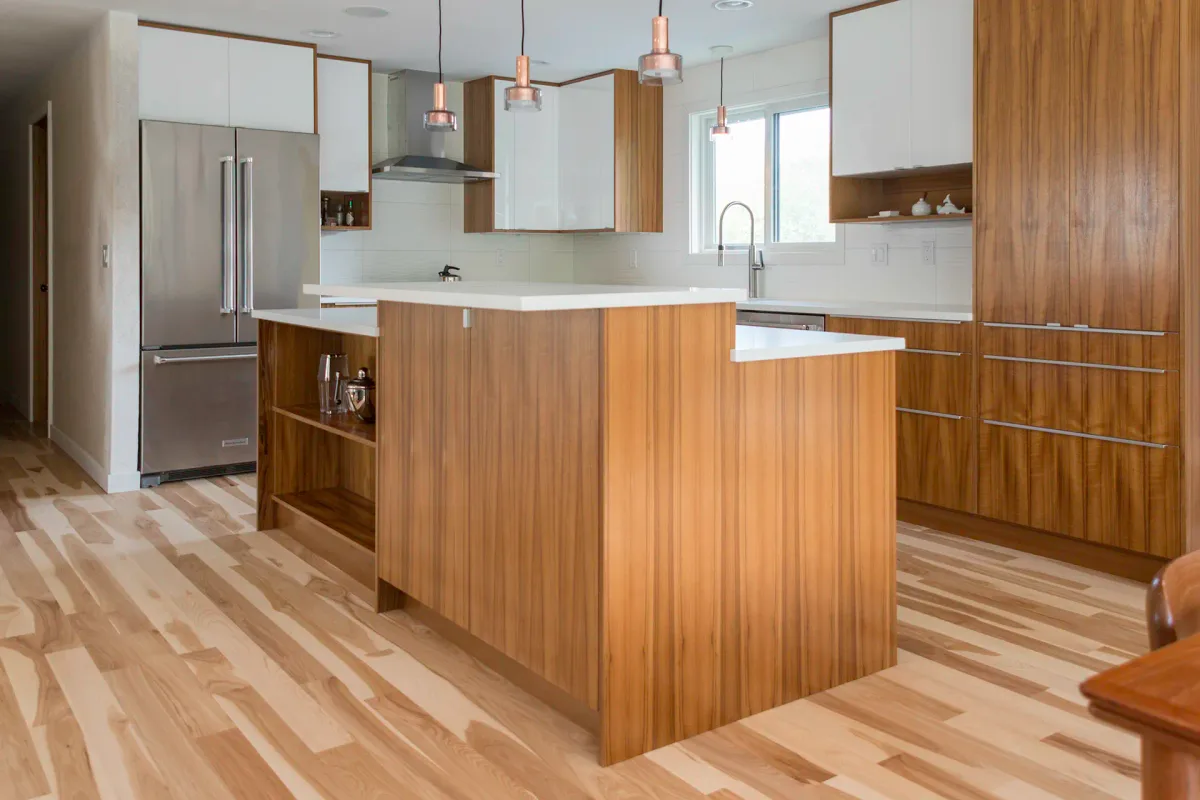
If you’re changing your cabinet layout or opening up walls, new flooring usually comes with the territory:
| Material | Installed Cost (per SF) |
|---|---|
| LVP / Rigid Core Composite (COREtec, etc.) | $6–$8/SF |
| Prefinished / Engineered Hardwood | $10–$16/SF |
| Unfinished Hardwood (site-finished) | $15–$17/SF |
| Ceramic / Porcelain Tile | $24–$29/SF |
LVP is my most frequent budget-saving recommendation for Seattle kitchens. It’s waterproof, holds up to our climate, and the better products with a rigid core and 3–6mm wear layer have gotten genuinely good. If you’re opening up the kitchen to the rest of the house, though, continuity matters. Site-finished hardwood can be interlaced with your existing floor and stained to match, so there’s no visual break at the kitchen threshold. That seamless transition is hard to replicate with prefinished or LVP.
Demo, Drywall, and Finishing Work
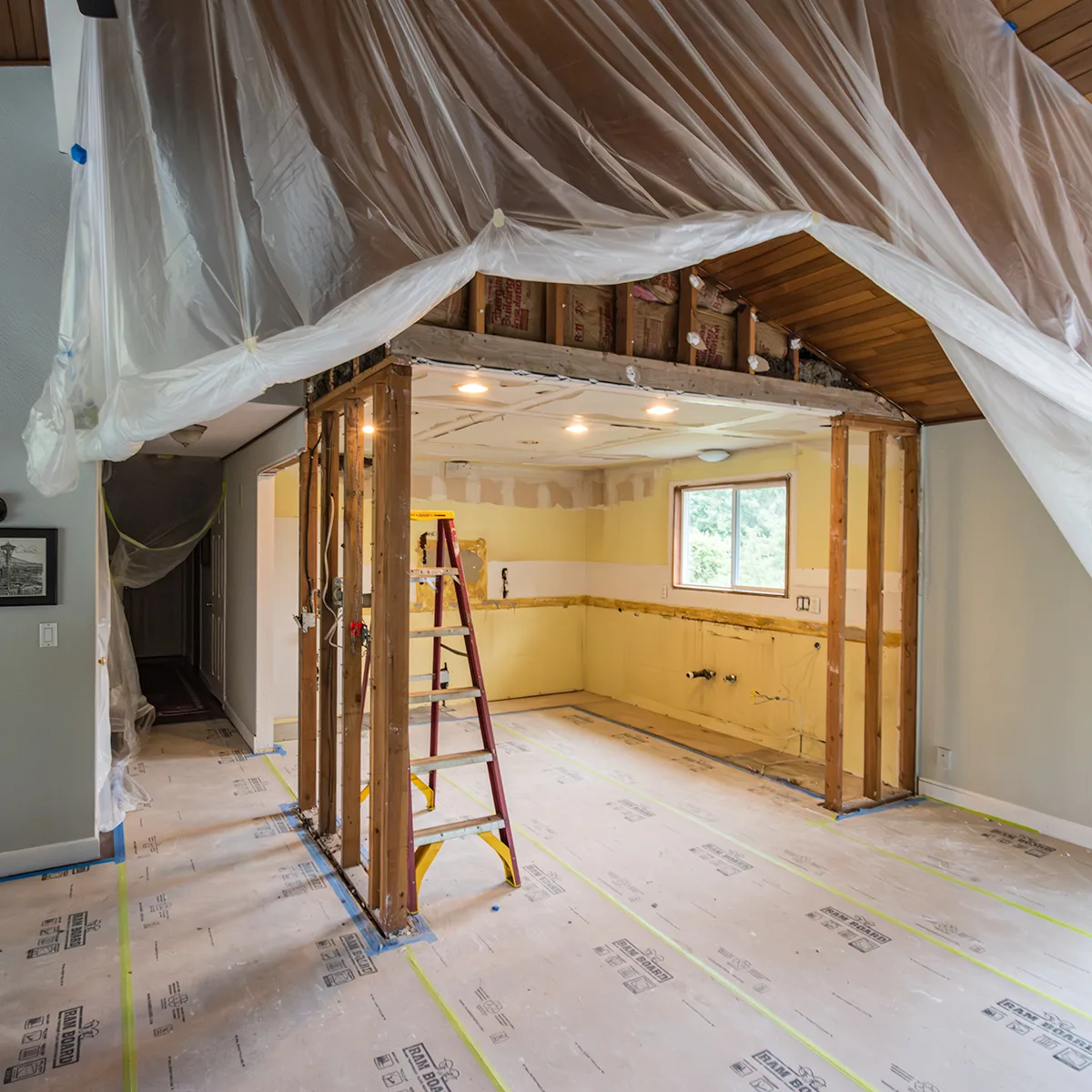
This is the part that catches people off guard. You can’t put new cabinets in without removing the old ones, which is going to cause drywall damage, and any electrical or plumbing work will require drywall patching as well:
| Item | Cost |
|---|---|
| Kitchen demo (cabinets, appliances, backsplash disconnect) | $14/SF |
| Flooring removal | $7.50/SF |
| Drywall repair (varies by scope) | $600–$2,700 for a 120SF kitchen |
| Trim (material + install) | $5/SF |
| Paint (walls, ceiling, and trim) | $11/SF |
For a typical 120SF full remodel with recessed can lights and new flooring, the demo/prep/finishing bundle runs around $6,000–$7,000. It’s not glamorous work, but it’s a real chunk of every job.
The drywall repair range scales with your electrical and plumbing scope: adding recessed cans means cutting dozens of holes in the ceiling. Moving a sink or adding a pot filler means cutting into walls. Plan accordingly.
Electrical
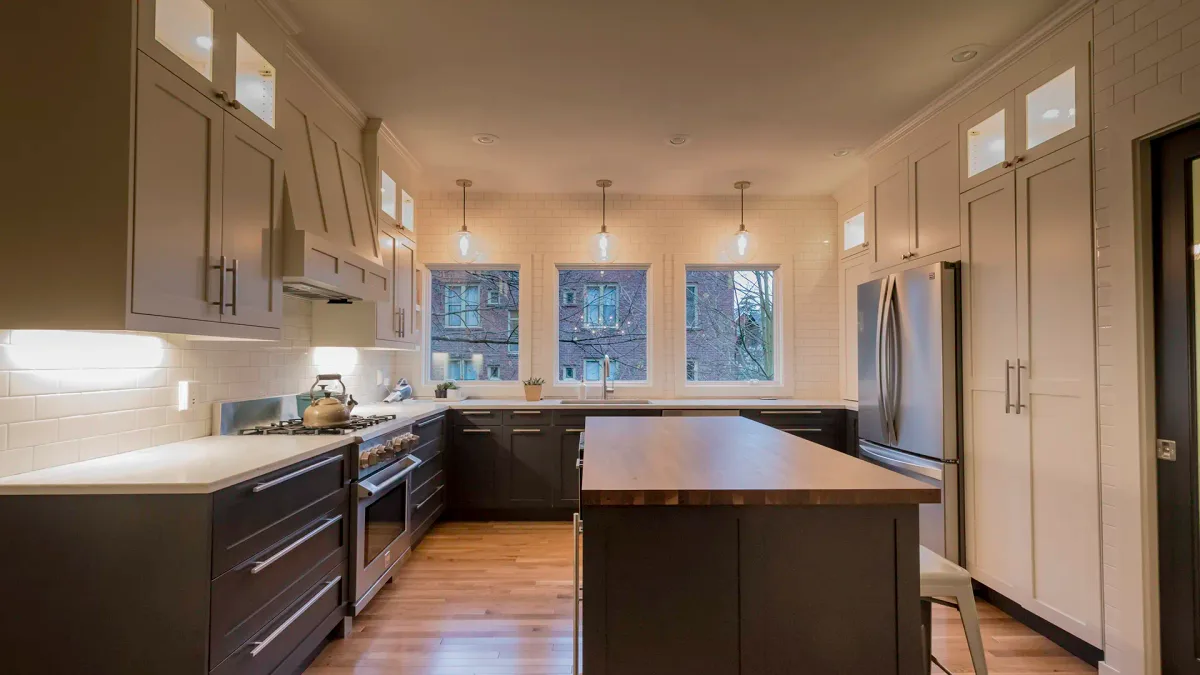
Electrical upgrades are often more than people expect:
| Item | Cost |
|---|---|
| Recessed can lights | ~$12/SF of kitchen |
| Under-cabinet lighting (hardwired LED) | ~$6/SF |
| Pendant / island lights | ~$7.50/SF |
| Outlet and circuit relocation (layout change) | $1,260 base + $2/SF |
For a 120SF kitchen: recessed cans ~$1,440, under-cabinet ~$720, pendants ~$900. A full layout change with outlet and circuit relocation adds another ~$1,500. Electrical permits are required for new circuits and new lighting rough-in — my electrician pulls those, and they’re included in the prices above.
Plumbing
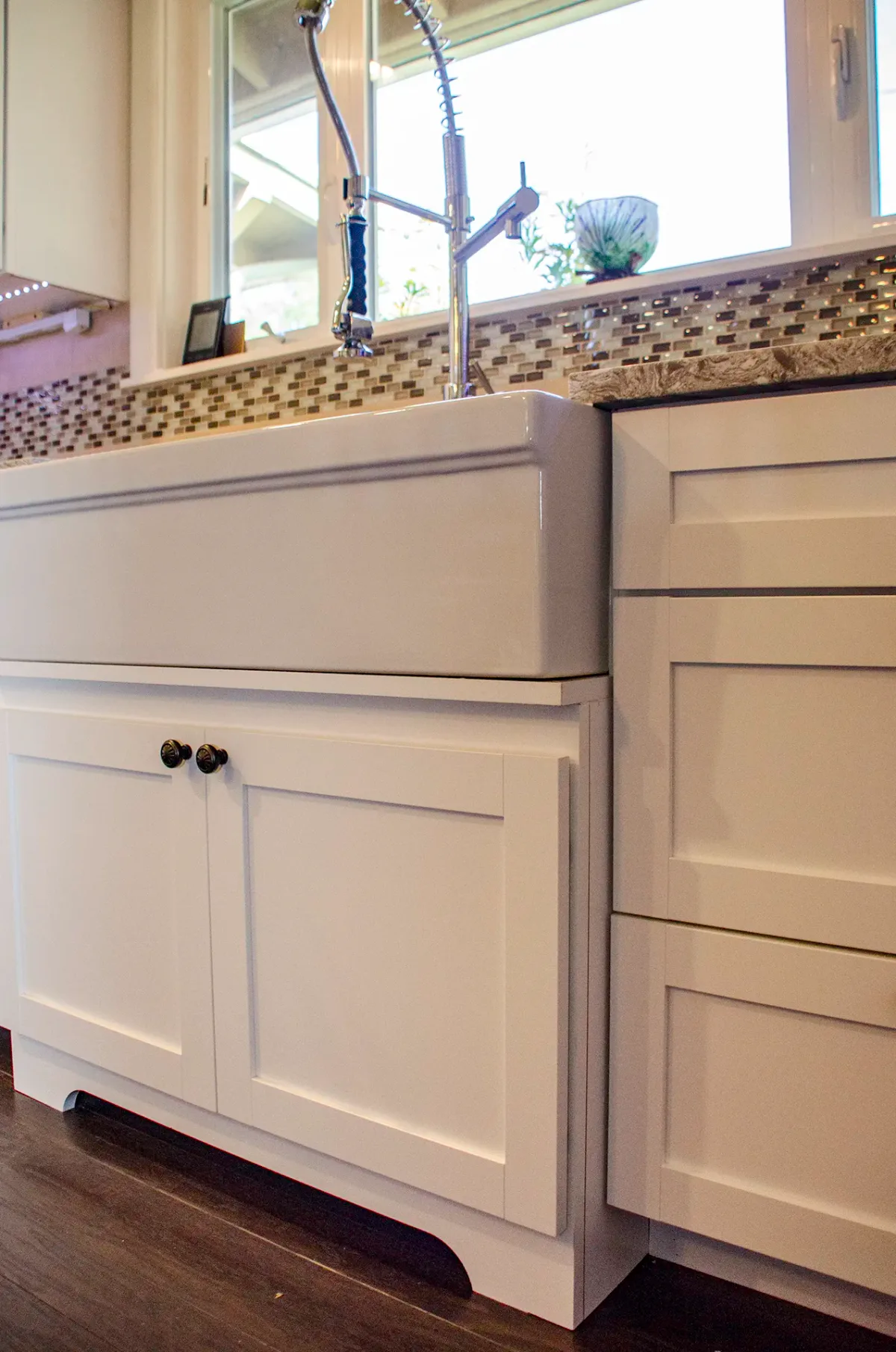
Plumbing in a kitchen remodel is mostly a sink/faucet/disposal swap unless you’re moving the sink location:
| Tier | Total (sink + faucet + disposal, installed) |
|---|---|
| Budget | ~$835 |
| Mid-Range | ~$1,325 |
| High-End | ~$2,500 |
Moving the sink — say, to an island or a different wall — involves relocating drain lines, which requires a plumbing permit and adds $1,500–$3,000 depending on complexity.
Do You Need a Permit in Seattle?
Permits typically required:
- Structural changes (removing load-bearing walls)
- Electrical panel upgrades
- New circuits or significant rewiring
- Moving plumbing drain lines
Permits typically not required:
- Replacing cabinets in the same footprint
- New countertops or backsplash
- Swapping appliances
- Paint, flooring, and cosmetic updates
For structural work, Seattle DCI permit approval typically takes 2–4 weeks for a residential kitchen. Electrical and plumbing permits, on the other hand, can usually be pulled over the counter or online by the contractor — often same-day or next-day.
How Long Does a Kitchen Remodel Take?
- Budget / cosmetic remodel (no layout change): 2–4 weeks
- Mid-range full scope (minor layout change): 5–8 weeks
- Upper-mid / full gut (structural changes, new electrical): 8–14 weeks
Add 2–4 weeks before that for structural permit approval when required. If you’re doing custom cabinetry, factory lead times of 8–16 weeks from order to delivery are normal — that often determines your project start date more than anything else.
Always Build in a Contingency
One piece of advice I give every client: budget an additional 10–20% above your estimate for unexpected costs.
Remodeling is detective work. You don’t know what’s behind the walls until you open them up. After 30 years in this trade, I still get surprised — dry rot under a window, a previous owner’s DIY electrical work tucked behind the tile, a subfloor that needs sistering before you can lay new flooring. An experienced contractor will know what’s likely based on the age and condition of your home, but nobody has x-ray vision.
That contingency buffer isn’t pessimism. It’s just how remodeling works. Homeowners who plan for it finish the project without stress. Homeowners who don’t end up making hard tradeoffs mid-job.
Try Our Free Cost Estimator
If you want to model out your specific project before calling anyone, we built a free kitchen remodel cost estimator that uses the same pricing data I outlined above. Plug in your kitchen size, finish levels, and scope — you’ll get a detailed cost range in a few minutes.
Frequently Asked Questions
How much does a kitchen remodel cost in Seattle?
Most Seattle kitchen remodels fall between $35,000 and $100,000 for mid-range to upper-mid projects. Budget projects using IKEA or stock cabinets can come in at $15,000–$35,000. High-end and custom projects run $100,000–$175,000+.
What is the most expensive part of a kitchen remodel?
Cabinets are almost always the biggest line item — typically 30–40% of total project cost. For upper-mid and high-end projects, appliances can rival or exceed cabinetry costs.
How much should I budget for cabinets in a Seattle kitchen?
For a 120SF kitchen, expect around $7,200 for IKEA installed, $12,400 for mid-range, $19,200 for semi-custom, and $32,500+ for fully custom.
Do I need a permit to remodel my kitchen in Seattle?
Not for cosmetic work — new cabinets in the same footprint, countertops, backsplash, flooring, and appliance swaps typically don’t require permits. Structural changes, panel upgrades, new circuits, and drain line moves do. Your contractor should handle the permit applications.
Does a kitchen remodel add value to my home?
Yes. A mid-range kitchen remodel typically recoups 60–80% of its cost in home value in the Seattle market, per Remodeling Magazine’s Cost vs. Value Report. An updated kitchen meaningfully affects sale price and days-on-market in the PNW.
How long does a kitchen remodel take in Seattle?
A straightforward mid-range remodel without structural changes takes 5–8 weeks from demo to completion. Add 2–4 weeks for structural permits when required. Custom cabinet lead times (8–16 weeks) often determine the actual project start date.
Ready to talk through your project? Get in touch or give us a call at (253) 448-9462 — we work across Tacoma, Seattle, Bellevue, and the greater Puget Sound area.