
I get a lot of phone calls from people who’ve just purchased their new home. We’re often the very first contractor they call after closing. And one of the things I hear from them, over and over, is some version of the same thing: every house we looked at felt the same.
They’re not talking about layout. They’re talking about character. Or, more specifically, the lack of it. White cabinets, gray LVP flooring, beige walls, builder-grade lighting. The same package, repeated thirty times across thirty different listings.
That’s the trap most sellers fall into when they renovate before listing. The conventional wisdom says play it safe. Neutral everything. Broadest possible appeal. Don’t alienate any buyers. The problem is that when every house in the comp set is doing exactly the same thing, “safe” isn’t safe anymore. It’s invisible.
I’ve spent over thirty years remodeling homes in the Seattle area, and more often than you’d think, I’m hired to redo the work the previous owner just paid to have done. The kitchen they renovated to sell the place gets ripped out a few weeks after the new owner moves in. Forty grand of finishes, gone! And most of the time, the reason isn’t that the renovation was too bold. It’s that there was nothing to it. Nothing to keep. Nothing to love.
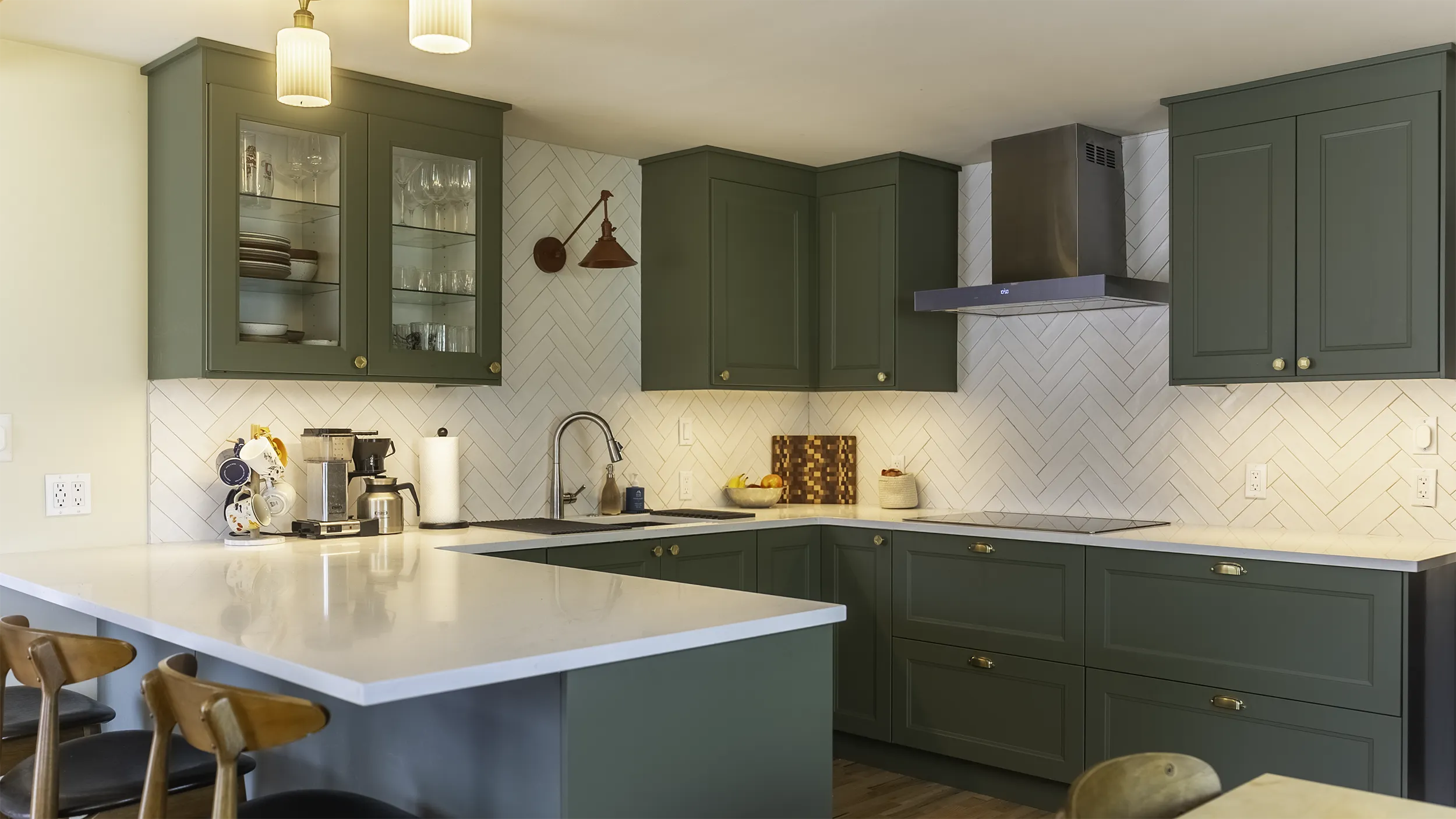
So if you’re getting ready to sell in 2026, here’s the advice I’d give to a friend: don’t be afraid of color. Don’t be afraid of trend, when the trend has substance. Don’t be afraid of style. A renovation with taste and character is going to stand out in a market full of beige, and standing out is what gets you to a better offer faster.
The rest of this is the why, the numbers, and the specifics.
What Buyers Actually Want vs. What Sellers Think They Want
Sellers tend to assume that anything personality-driven shrinks their buyer pool. The data, and my experience watching dozens of post-sale tear-outs, suggest the opposite. Buyers don’t fall in love with the absence of style. They fall in love with good taste and thoughtful design!

Three categories drive almost every decision I’ve watched buyers make:
- Kitchens — buyers spend more time in the kitchen during a showing than any other room, and the whole time they’re running scenarios. Could I host Thanksgiving here? Could the kids do homework at the island while I cook? Would I be able to host my friends here for dinner? If the answer is “yes, and I love it,” the offer goes up. If the answer is “no, and I’d have to redo it,” that becomes a $40K negotiation point on the way down.
- Bathrooms — especially the primary bath. The most personal room in the house. It should be inviting and comfortable. A dated primary bath gets priced straight into the offer as “the project I’ll have to do in year one,” whether the buyer says it out loud or not. A well-designed bathroom adds the kind of small daily luxury that justifies a higher number.
- Functional square footage — and the smartest version is finishing what the house already has: an unfinished basement, an attic with bedroom-worthy ceiling height, a bonus room over the garage. Conversions like these cost a fraction of an ADU or an addition because you’re not building foundation and framing. The space is already there, just waiting to be utilized. This is the only category that grows the measurable size of the house, and with increased size you get increased value.
Everything else is supporting cast. But here’s the part most pre-sale advice gets wrong: how those rooms are designed matters as much as whether they were renovated at all. A renovated kitchen with no point of view doesn’t move the needle the way a well-designed kitchen with personality does, even at the same budget.
Kitchens — Layout Beats Finishes (But Finishes Still Need a Point of View)
If I had one piece of advice for a seller renovating a kitchen before listing: fix the layout first.
The number-one request we get from new homeowners is to open up the wall between the kitchen and the dining or living room. Buyers don’t want to be cut off from family or guests while they cook. If your house has a closed-off galley kitchen with a wall separating it from the rest of the house, opening that up will move the needle on your sale price more than any backsplash will.
After layout, here’s where I’d push back on the “play it safe” advice:
- Quartz countertops. Engineered quartz is what buyers expect at the mid-range and up. But you don’t have to default to plain white. Veined quartz with real visual interest, soapstone-look quartz, or warm-toned options give the kitchen something to anchor on. Same install cost. Bigger impression!
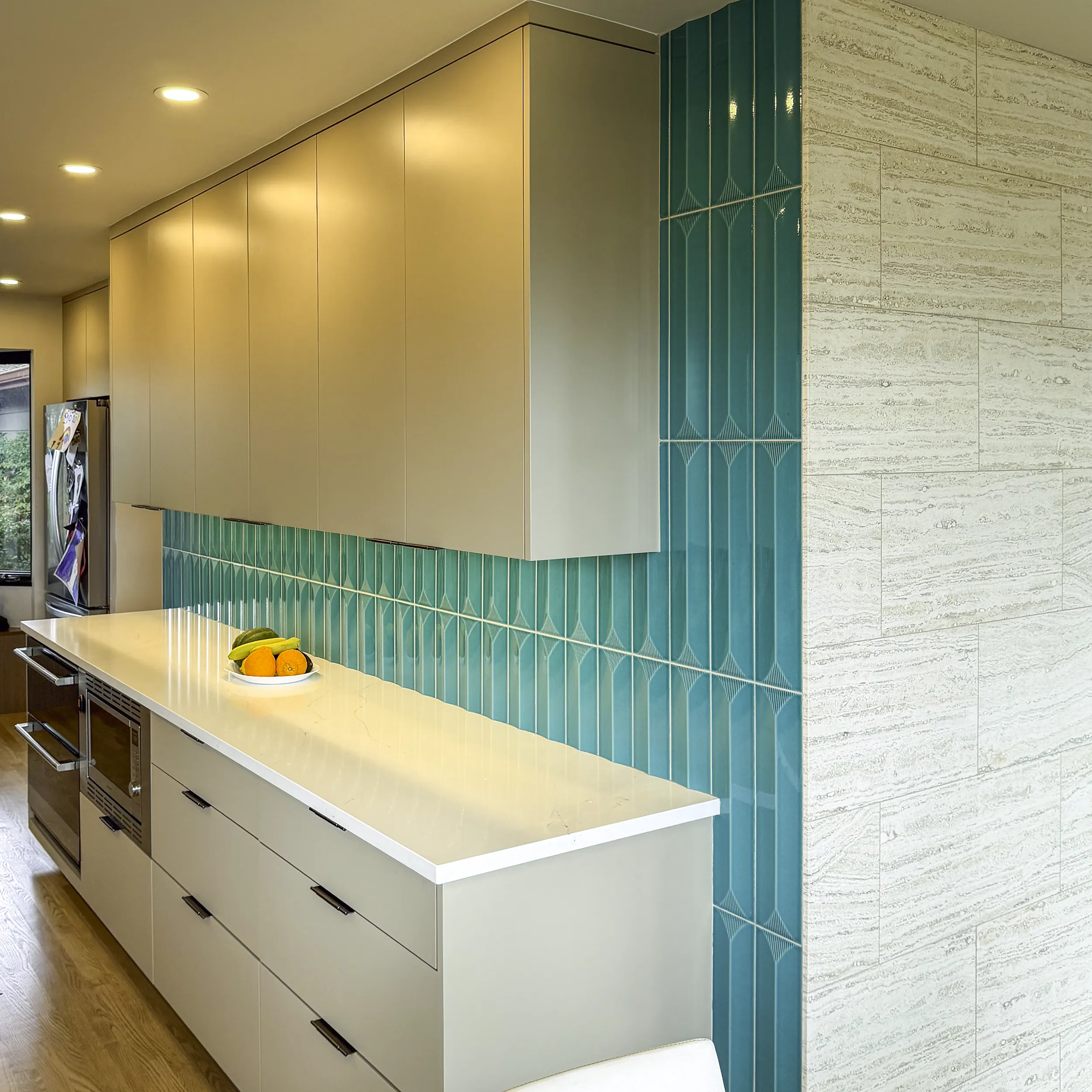
- Tile backsplashes with character. This is one of the cheapest ways to inject personality. A handmade-look ceramic tile, a tasteful zellige, a vertical stack or herringbone instead of subway brick. The labor is the same whether you install plain or interesting tile.
- Cabinetry with tone, not just color. Buyers are responding to warmth and depth in cabinet finishes right now. Soft warm whites instead of stark. Stained wood with visible grain. Quiet earth tones. Consider walnut, deep green, or navy for a single bank as an accent. These thoughtful touches will make the kitchen feel designed instead of generic.
- Continuous flooring that connects rooms. Site-finished hardwood that runs through is the luxury move; LVP is the smart budget one. Either way, continuity matters. The visible threshold between mismatched flooring is the kind of detail buyers register without realizing it.
- Appliances with intention. They don’t have to be Wolf and Sub-Zero. GE, LG, or Samsung in a clean matching package is more than enough. But the matching matters. Mixed brands and finishes read as builder-grade no matter how new the appliances are.
- Island or peninsula with bar seating. One of the most valuable features you can add to a kitchen. It makes the kitchen the place where everyone can gather — kids can do homework at the bar while you cook, friends can keep the conversation going while you check on the roast. Keep it a single continuous counter rather than a raised bar top. This gives you roughly 36” of uninterrupted workspace to roll out pastry or pizza dough. My own kitchen has one, and I love it! Being able to spread out a full mise en place for a complicated dish is a real luxury most kitchens don’t give you.
A couple of things I’d specifically rethink:
- The all-white kitchen. It worked for a long time. It’s now the visual signature of every flip on the MLS, and buyers are starting to scroll past it. The issue isn’t white itself; it’s all-white-everything: white cabinets, white quartz, white subway, white walls, white pendants. After thirty listings of that package, even a beautifully done version blurs into the rest. If you want the white-kitchen look, break it up somewhere. The floor, the hardware, the pendants, or the island. Anything that gives the eye somewhere to land.
For the actual numbers on what a kitchen remodel costs in this market, our Seattle kitchen remodel cost guide has the full breakdown. Our kitchen remodeling services page covers the full design-build process if you’re considering it.

Bathrooms — The Tub-to-Shower Move (and How to Make It Feel Like Yours)
Bathrooms are the second biggest opportunity, and the request I get more than any other is to rip out the tub/shower combo and replace it with a walk-in shower.
The standard 60-inch tub/shower combo feels dated to most buyers. Almost nobody actually takes baths anymore, especially in the shallow, cramped tubs you find in most tub/shower setups. A tile walk-in shower with a glass enclosure looks dramatically more current and more practical. If young kids are part of the picture, you still want a tub somewhere in the house. If the bathroom is large enough to fit both a freestanding soaking tub and a walk-in shower, that’s the luxury setup buyers are dreaming about.
Here’s where the “all-white bathroom” advice falls apart in the same way the all-white kitchen advice does. The spa-white bathroom has been the default in flip culture for fifteen years. Every staged listing has one. They blur together.
The bathrooms that get talked about by real estate agents and remembered by buyers tend to:
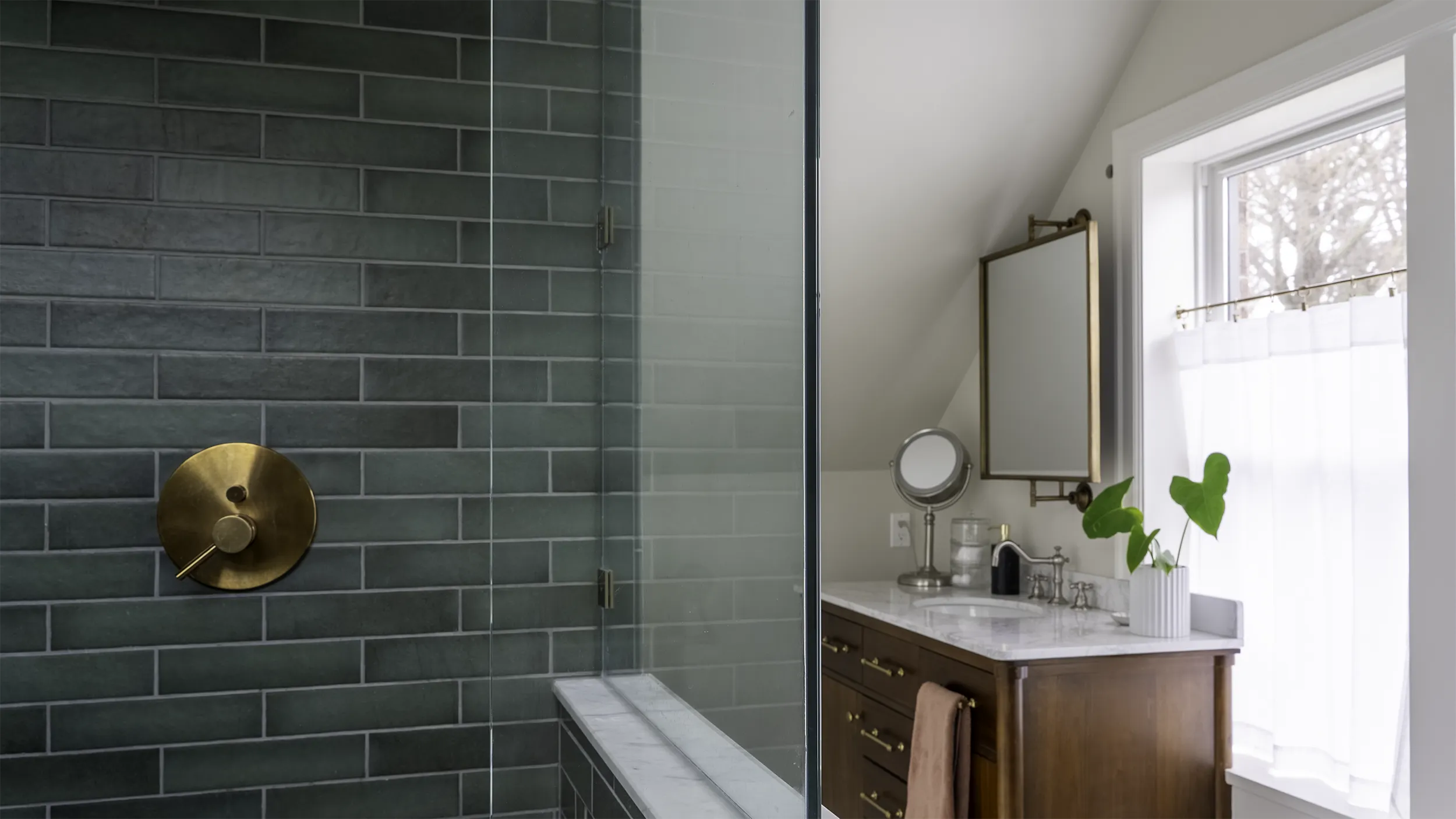
- Use tile as design, not just surface. Patterned floor tile, a vertical stack on the shower walls, a feature wall behind the vanity. Tile is one of the most cost-effective places to express character. The labor is the same whether the tile is plain or interesting.
- Choose fixtures with intention. Brushed brass, matte black, polished nickel. Pick one and run it consistently. Builder-grade brushed nickel fixtures are a dead giveaway for a budget flip house.
- Keep things buyers actually use. Tile shower surrounds beat fiberglass inserts every time. Tile flooring lifts the room significantly compared to vinyl. Heated floors and heated towel bars in the primary bath are quiet luxury touches that get called out in listings.
- Sweat the small details. Outlets next to the toilet for bidet seats. Outlets inside the vanity for chargers and electric toothbrushes. Buyers don’t ask for these. They notice immediately after move-in.

If you’ve never priced a bathroom remodel in this market, our bathroom remodeling services page walks through what’s involved.
Adding Usable Square Footage Without Building an Addition
Of all the projects I get asked about for ROI, this is the one that can really tip the scales. An unfinished basement or attic is a diamond in the rough. Most homeowners look at that space and see junk storage. I look at it and see square footage waiting to be unlocked.
A finished version of that space — basement, attic, bonus room over the garage — can meaningfully increase a home’s appraised square footage at a fraction of what a true addition would cost. The hard parts (foundation, framing, roof) are already done. You’re paying for finishes, insulation, lighting, and maybe a bathroom rough-in. The result shows up on the listing as more bedrooms, more baths, or more living area, depending on how you use the space.
What you actually do with that space matters as much as the fact that you finish it. The conversions that move the needle most are the ones that map cleanly to how buyers think about their lives:
- A guest suite or in-law suite. Bedroom plus a full bathroom, ideally with its own private access if the layout allows it. This is the conversion that gets called out in listings as “bonus suite” or “second primary,” and it’s the one that opens the home to multi-generational buyers — a fast-growing share of the market right now.
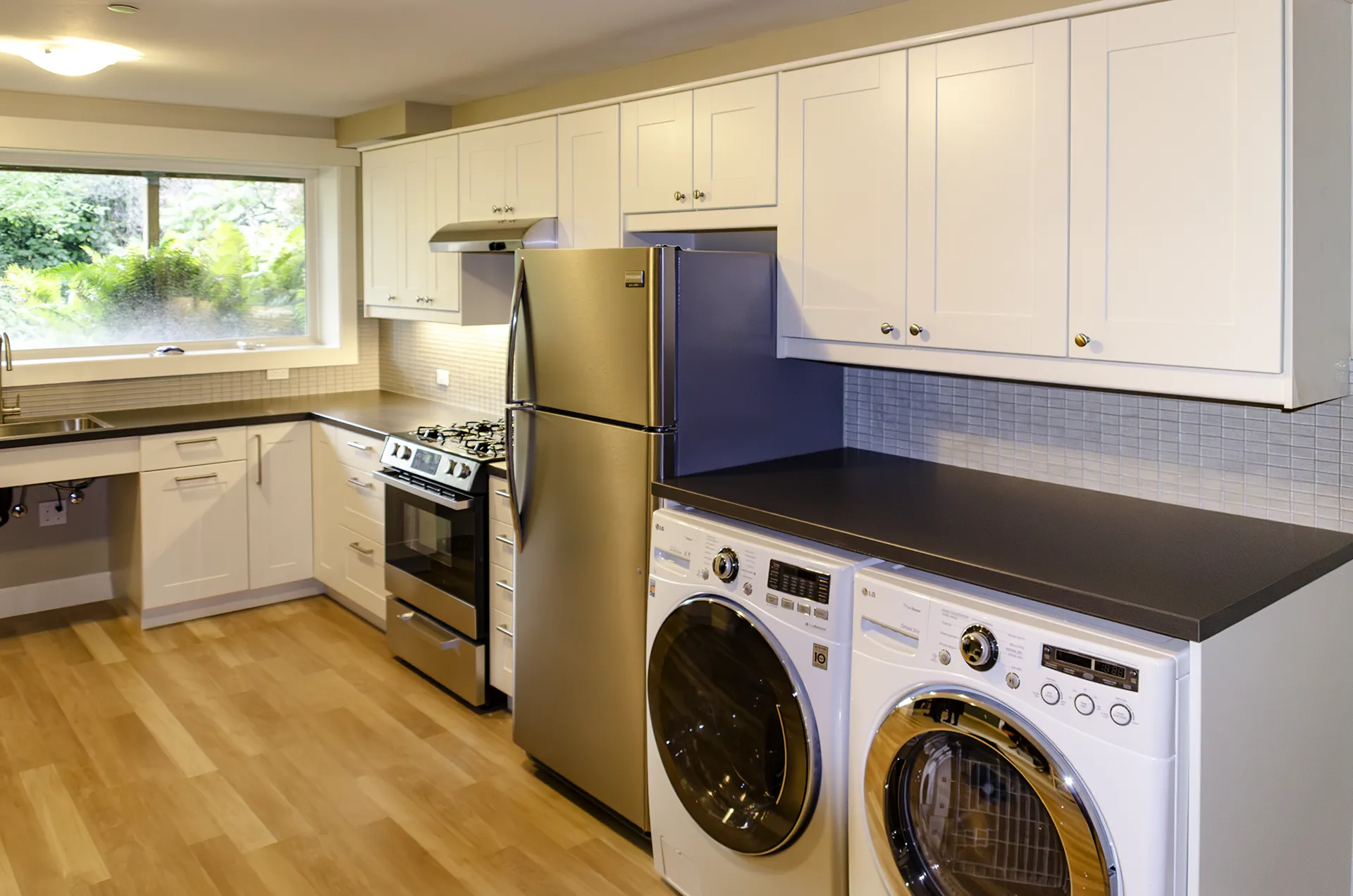
- A separate living space with a kitchenette. Bedroom, bath, sitting area, and a small kitchenette (sink, fridge, microwave, sometimes a cooktop). One step short of a full ADU, but most of the way there in functionality. Adult kids, aging parents, or the long-term guest you didn’t mean to host but ended up loving.
- A home office or studio. Post-2020, a real working office with daylight, sound separation, and proper electrical is a feature buyers actively search for. Especially valuable in basements and attics, where you’re naturally away from the busy parts of the house.
- A media or rec room with a wet bar. Still works in 2026, but the wet bar is what saves it from feeling like a 1990s rumpus room. A run of real cabinetry, a beverage fridge, decent counter, and pendant lighting turns it from “place the kids hang out” into a hosting space adults will use too.
- An additional bedroom. Often the simplest add, but it only counts toward bedroom count on the appraisal if it has a closet and proper egress. Worth the work — going from 3-bedroom to 4-bedroom often unlocks a whole new buyer pool.
A few practical notes that apply across most unfinished-space projects:
- Make it feel like part of the house, not an afterthought. The biggest signal is light. Spaces with proper egress windows, light wells, or attic dormers feel like rooms; spaces with one builder-grade fixture in a low ceiling feel like storage. After light, the next signals are the small details that tie the new space to the existing one. Matching baseboards and trim. Stair railings that match what’s upstairs, not utility-grade. Doors with the same hardware as the rest of the house. None of this costs much to coordinate during the build, and it’s what separates a real room from a finished basement.
- Each space has its own gotcha. In basements, it’s moisture and groundwater. In attics, it’s whether the floor framing was sized for living loads (often it wasn’t, and it’ll need to be sistered or rebuilt). Both are solvable. Both are where surprise costs come from when they’re missed.
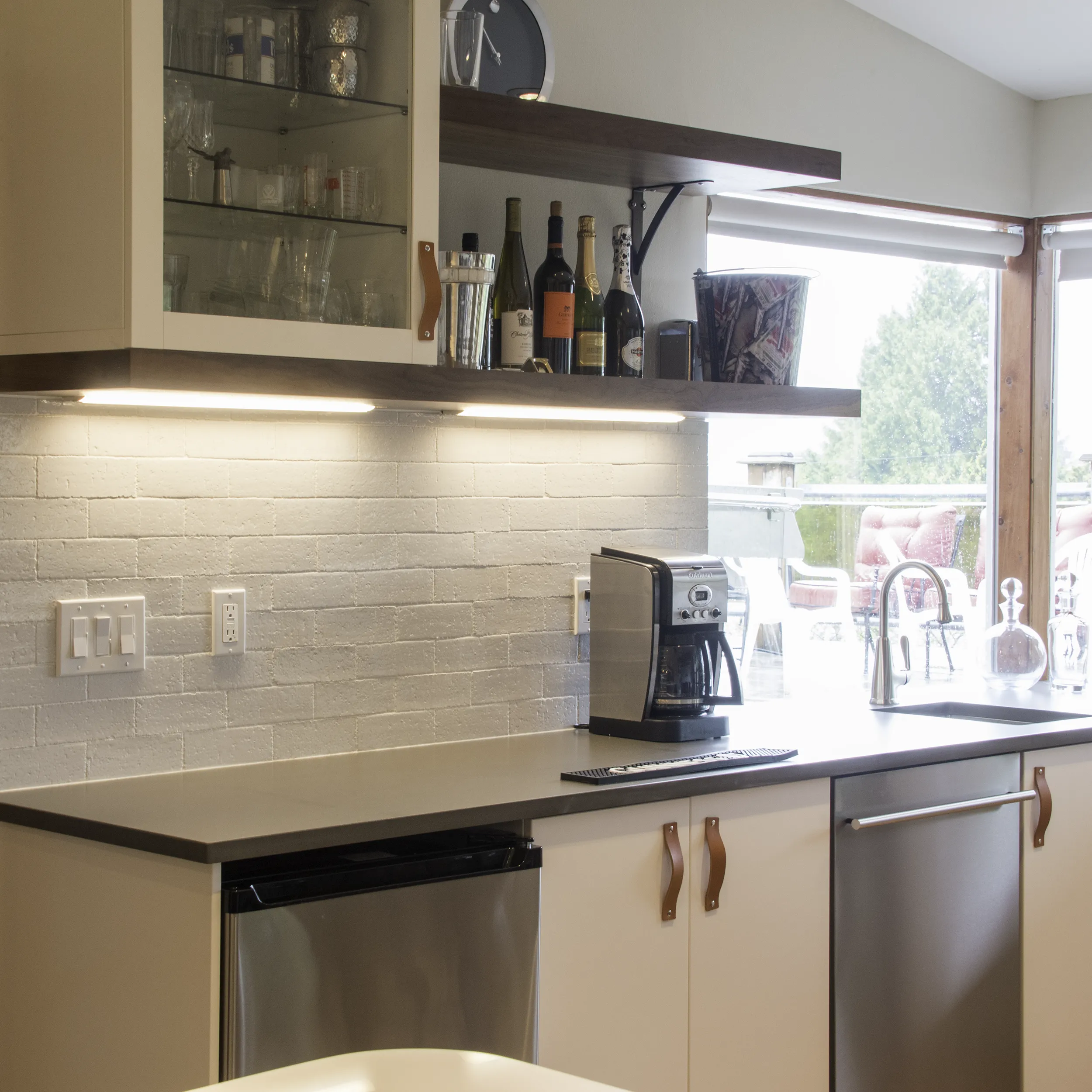
The same logic extends to garage conversions, sun rooms that could be insulated and made year-round, and any other enclosed-but-underutilized space the house already has. The category to look at is “expanding what you already have.” Our additions and beyond services page covers what’s involved if you’re considering one of these projects.
Interior Design Decisions Worth the Investment
Beyond the big-ticket renovations, there are a handful of smaller projects that punch above their cost. These are also where the “play it safe” advice does the most damage, because the reverse is true. Small, considered choices are where character lives.
- Repaint in colors that have personality. This is the single highest-ROI move on the entire list. The conventional advice is “neutral and forgettable.” I’d say neutral and considered. Soft warm whites with depth. Earthy greens in a powder room. A deeper warm accent on a dining room or library wall. The cost is the same as builder beige, but the result reads as designed instead of stale.
- Refinish hardwood floors instead of replacing them. A hardwood refinish is one of the absolute best ROI projects in the NAR Remodeling Impact Report, with a recoup rate around 100%. A slightly warmer or richer stain on existing hardwood gives a house a totally different feel for a fraction of the cost of new floors.
- Update lighting with personality. Builder-grade brushed nickel and flush-mount fluorescents are the easiest tells of an unloved house. The fix is cheap. A single statement fixture in the entry, dining room, or kitchen pendant zone changes the read of a room more than its cost suggests.
- Replace the front door, and paint it. A new fiberglass or steel front door consistently recoups 65–90% of cost per the Cost vs. Value Report. A painted door, in a color that complements the trim, is what gives the house its first impression.
- Hardware refresh. New cabinet pulls, new door knobs, new bathroom faucets in a consistent finish. Small cost. Big visual lift.
ROI Reality Check — What the Numbers Actually Say
Here’s a candid summary of what to expect on resale.

The general principles, with one nuance most pre-sale guides skip:
- Maintenance and “expected” upgrades pay back the most. A new roof, refinished hardwood, fresh paint, a new garage door. These prevent the buyer from negotiating the price down.
- Mid-range remodels recoup more than high-end ones. A $30,000 kitchen remodel often recoups a higher percentage than a $90,000 one, even though the absolute dollar return on the bigger project is higher. Sellers consistently over-invest at the high end.
- “Personal taste” is not the same as “good taste.” This is the line most pre-sale advice blurs. Buyers don’t pay a premium for choices that constrain how they’ll live in the space (a bright purple kitchen, tiger-stripe tile, custom built-ins for a one-person hobby). They do pay for design that’s confident and considered. A well-designed sage green kitchen with brushed brass hardware is design. A Pepto-Bismol pink kitchen is personal taste. There’s a meaningful difference, and treating them as the same thing is what produces beige flips.
The Cost vs. Value Report by Zonda / Remodeling Magazine (costvsvalue.com) and the Remodeling Impact Report by NAR (nar.realtor) are the two authoritative national datasets on this. I cite them constantly in client conversations.
The Timeline Question — Should You Renovate Now, or Sell As-Is?
This is the question I get asked most often. There’s no universal answer, but here’s the framework I use.
Renovate before selling if:
- The work would address a buyer objection that will tank your offers (failing roof, no functional kitchen, dated bathrooms in an otherwise nice house).
- You’ve got 4 to 6 months before listing to actually finish the work.
- The market is strong and inventory is low.
- You can afford it without leveraging the projected sale.
Sell as-is if:
- You’re under time pressure.
- The market is hot enough that buyers are bidding regardless of condition.
- The renovations would be expensive enough that the recoup math doesn’t work.
- You’d rather offer a credit and let the buyer choose their own finishes.
The middle path is what I’d call a targeted pre-sale refresh rather than a full remodel. Paint, hardware, light fixtures, new front door, deep clean, professional staging, plus one or two strategic projects (the tub-to-shower swap, a kitchen island update, refinishing the floors). That whole package can range from $25,000 to $40,000, and the difference is what you spend it on. A refresh in considered colors and finishes pays for itself. A refresh in builder beige just buys you another house that looks like every other listing.
A Few FAQs
Should I renovate my home before selling?
In most cases, yes, but a targeted refresh rather than a full remodel. And don’t default to the all-beige version. Focus on paint, flooring, kitchen and bathroom updates, and curb appeal, and make tasteful, considered choices instead of generic ones. The house that gets remembered is the house that gets the offer.
Is it worth replacing windows before selling a house?
Usually, yes. Vinyl window replacement consistently recoups 60–70% of cost per the Cost vs. Value Report, and it removes a common buyer objection in older homes. If your existing windows are single-pane, fogged, or mismatched, replacing them is one of the higher-ROI projects you can do.
Should I repaint my house before selling?
Almost always, yes. But the “always paint everything off-white” advice is outdated. Fresh paint in considered colors (soft warm whites with depth, earthy tones in accent rooms, intentional palettes) costs the same as builder beige and gives the house a meaningful lift. Avoid polarizing bright colors. Don’t avoid color entirely.
Should I buy new appliances before selling?
Only if the existing ones are visibly dated, mismatched, or non-functional. New appliances do not need to be high-end. A clean matching mid-range package (GE, LG, Samsung) is fine. Matching matters more than brand.
Does a new roof increase home value?
Yes, but more importantly it removes a major buyer objection. A failing roof gets called out in inspection, and buyers will negotiate the cost off the price plus a margin. If your roof is past 20 years old, replacing it before listing is almost always the right move.
Does a finished basement add value?
Yes. A finished basement, especially with a bathroom, can meaningfully increase a home’s appraised square footage at a fraction of the cost of a true addition. The key is making it feel like real living space, not an afterthought rec room.
Closing
The houses that sit on the market the longest in 2026 are not the bold ones. They’re the ones that look like every other house. The seller spent forty grand making their kitchen look “neutral,” and now their kitchen looks like every other neutral kitchen on the MLS. There’s nothing to fall in love with. There’s nothing to remember.
If you’re getting ready to sell, here’s the playbook I’d give a friend over coffee. Prioritize the rooms buyers use most. Fix layout problems before chasing finishes. Add functional square footage where you can. And then, when it comes to the design choices, make actual choices! A tasteful renovation with personality costs the same as a generic one. It just sells better, and it’s the one the new owner will keep.
If you’re not sure which choices make sense for your specific house, that’s the kind of conversation I’m here for. Get in touch or call us at (253) 448-9462. We work across Tacoma, Seattle, Bellevue, and the greater Puget Sound area, and I’m happy to give you an honest read on which projects are worth it and which aren’t.
If you’re earlier in the process and just gathering information, our guide to finding the best kitchen remodeler in Seattle covers what to look for in any contractor you hire, whether you’re prepping to sell or planning to stay.